Sea Turtle Nesting in Melbourne Beach: The Magic of Watching Nature Without Disturbing It
Why keeping our beaches dark, respecting nesting turtles, and knowing what to look for makes all the difference.
One of the most extraordinary things about living in Melbourne Beach is something that happens quietly, mostly under the cover of darkness, right along our beautiful Atlantic shoreline.
Every year, enormous sea turtles emerge from the ocean, crawl onto our beaches, dig their nests, and lay their eggs in the sand. Weeks later, tiny hatchlings emerge and begin their incredible journey toward the sea.
It's one of nature's most remarkable experiences, and we are fortunate to live in one of the world's most important sea turtle nesting regions.
But there's something I wish every visitor and new coastal homeowner understood:
If you want to appreciate sea turtles in their natural environment, the most important thing you can do is leave them alone, give them plenty of space, and keep the beach dark.
The Biggest Mistake People Make: Bringing a Flashlight
I understand the temptation. You're walking along the beach at night, hoping to catch a glimpse of a nesting sea turtle, and naturally, you reach for your flashlight or turn on the light on your cellphone.
Unfortunately, that light may be the very reason you never see a turtle.
Nesting sea turtles seek dark, relatively undisturbed beaches. Artificial lighting can discourage females from coming ashore or cause them to abandon a nesting attempt and return to the ocean without laying their eggs.
Even a cellphone flashlight, camera flash, or bright screen can create a disturbance.
And the problem doesn't end with adult turtles.
When baby sea turtles hatch, they instinctively orient themselves toward the brighter natural horizon over the ocean. Artificial lights from homes, flashlights, and nearby buildings can confuse them, sending them toward roads, parking lots, and other dangerous areas instead of the water.
A few seconds of artificial light can disrupt a journey that has taken millions of years of evolution to perfect.
That's why my advice is simple: Leave the flashlights off, keep cellphone lights off, and never use flash photography around sea turtles.
The Secret Is Learning to Read the Beach
One of my favorite things about Melbourne Beach is discovering evidence of the wildlife that shares our shoreline.
During nesting season, a walk along the beach at first light can reveal something extraordinary: the unmistakable tracks left behind by a sea turtle.
Imagine walking along the shoreline and seeing two broad, parallel impressions stretching from the ocean toward the dunes.
Those tracks tell a story.
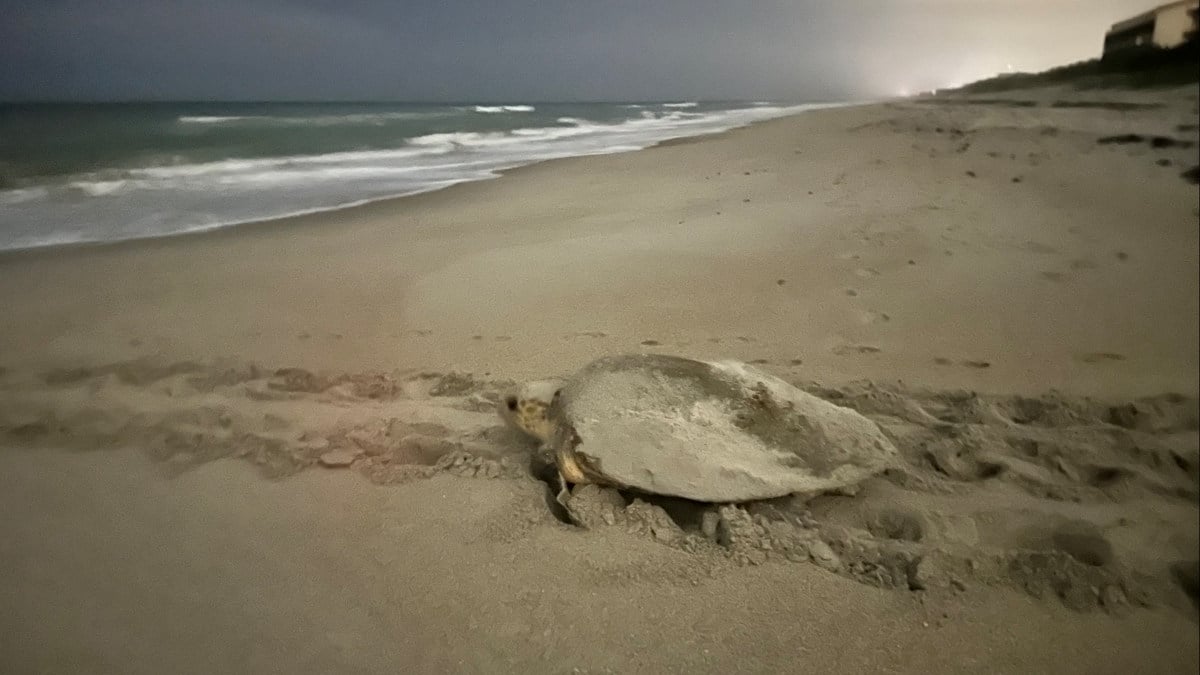
A large female turtle emerged from the surf, made her way across the sand, and may have spent hours digging a nest, laying eggs, and carefully covering them before returning to the ocean.
You can often follow the tracks with your eyes from the waterline toward the nesting area without ever approaching or disturbing the nest itself.
Sometimes you'll see evidence of where the turtle turned around and returned to the water.
Other times, the tracks lead toward a freshly disturbed patch of sand where she may have deposited her eggs.
It's a fascinating experience, and you don't need to see the turtle herself to appreciate what happened.
My favorite way to enjoy this is at dawn, when there's enough natural light to see the tracks clearly without disturbing nesting turtles at night.
Please never follow tracks into the dunes, walk over an active nesting area, dig in the sand, or interfere with nest-monitoring activities.
What About Walking the Beach at Night?
There's something magical about walking our beaches under the moonlight, listening to the waves and enjoying the natural beauty of the Atlantic Ocean.
If you are already walking along an area where nighttime beach access is permitted, the best approach is to use available moonlight and starlight rather than artificial lighting, provided you can navigate safely.
Allow your eyes to adjust to the darkness, walk slowly, and pay attention to your surroundings.
But here's an important distinction: I don't recommend searching for or approaching nesting turtles on your own at night.
If you're hoping to experience an actual nesting event, consider joining a permitted, guided sea turtle walk with trained conservation volunteers.
These programs are designed to give people an opportunity to observe this remarkable event while minimizing disturbance to the animals.
If you unexpectedly encounter a turtle while walking the beach, stop, remain quiet, keep all lights off, and give her plenty of room.
The experience should happen on the turtle's terms, not ours.
Give Nesting Turtles Plenty of Space
Sea turtles are incredibly sensitive to disturbances while nesting.
The Florida Fish and Wildlife Conservation Commission recommends staying at least 50 feet away from nesting turtles. More distance is appropriate if the turtle appears disturbed.
Never stand directly in front of a turtle, surround her with people, approach her from the ocean side, or block her route between the water and nesting area.
If a turtle changes direction, stops her activity, or appears to react to your presence, you may already be too close.
Don't touch her, attempt to guide her, or interfere with the nesting process.
The same applies to hatchlings. As tempting as it may be to help a baby turtle reach the water, they should normally be allowed to make that journey themselves.
Watching from a respectful distance is the greatest gift we can give these remarkable animals.
Melbourne Beach: A Special Place for Sea Turtles
Florida's Space Coast is internationally recognized for its sea turtle nesting activity.
Our beaches provide critical nesting habitat for loggerhead, green, and leatherback sea turtles.
From Melbourne Beach south toward Sebastian Inlet and the Archie Carr National Wildlife Refuge, this stretch of coastline supports some of the most significant nesting activity in the Western Hemisphere.
The primary nesting season extends through the warmer months, although nesting and hatchling activity can occur outside the peak season.
For those of us fortunate enough to live here, sea turtles are more than an occasional wildlife sighting.
They're part of the coastal environment that makes Melbourne Beach so extraordinary.
A Few Simple Ways to Protect Our Sea Turtles
Whether you live directly on the ocean, rent a vacation property, or simply enjoy visiting the beach, small decisions make a tremendous difference.
- Keep exterior beach-facing lights off at night whenever possible.
- Close curtains and blinds so interior lighting doesn't illuminate the beach.
- Avoid flashlights, cellphone lights, and flash photography on the beach after dark.
- Stay at least 50 feet from nesting turtles and never interfere with their movements.
- Respect marked nesting areas, and never disturb nests, eggs, or hatchlings.
- Remove beach chairs, umbrellas, toys, and other equipment before sunset.
- Fill in holes and flatten sandcastles so turtles and hatchlings don't become trapped.
- Take all trash and fishing line with you.
If lighting is necessary for safety, follow local sea turtle lighting requirements and use properly shielded, wildlife-friendly lighting.
The Best Wildlife Experiences Are Often the Quietest
I've spent much of my life near the water, and I still find it remarkable that these enormous turtles return to our beaches year after year.
There's something incredibly special about standing on a quiet stretch of coastline, listening to the surf, and knowing that somewhere nearby, a sea turtle may be continuing a nesting cycle that has existed for millions of years.
You don't need to chase that experience.
You don't need to shine a flashlight across the sand.
And you certainly don't need to get close enough for a photograph.
Sometimes the most memorable encounter is simply discovering a set of tracks in the sand the following morning and knowing that nature was hard at work while the rest of us were sleeping.
The less we interfere, the more opportunities these magnificent creatures have to return, nest successfully, and continue their incredible journey.
Another Reason We Love Calling Melbourne Beach Home
As a real estate professional who has spent more than two decades helping people discover the beauty of Melbourne Beach and Florida's Space Coast, I've always believed the lifestyle here is what makes our community truly special.
Of course, we have incredible oceanfront homes, beautiful riverfront properties, spectacular sunrises, and miles of uncrowded beaches.
But we also have something money simply cannot create: an extraordinary natural environment worth protecting.
Sea turtle nesting season is a wonderful reminder that we share this beautiful coastline with wildlife that depends on us to be responsible neighbors.
So the next time you take an early morning walk on Melbourne Beach, look for those remarkable tracks coming out of the ocean.
Appreciate the journey they represent.
And remember, sometimes the best way to experience nature is simply to let nature be.
Gibbs Baum | The Baum Team
ONE Sotheby's International Realty
301 Ocean Avenue
Melbourne Beach, FL 32951
Email: [email protected]
Website: www.GibbsBaumTeam.com
For additional information about sea turtle nesting, responsible wildlife viewing, and reporting injured or distressed turtles, visit the Florida Fish and Wildlife Conservation Commission at MyFWC.com/SeaTurtle. If you encounter an injured, disoriented, or stranded sea turtle, call the FWC Wildlife Alert Hotline at 888-404-FWCC (3922).