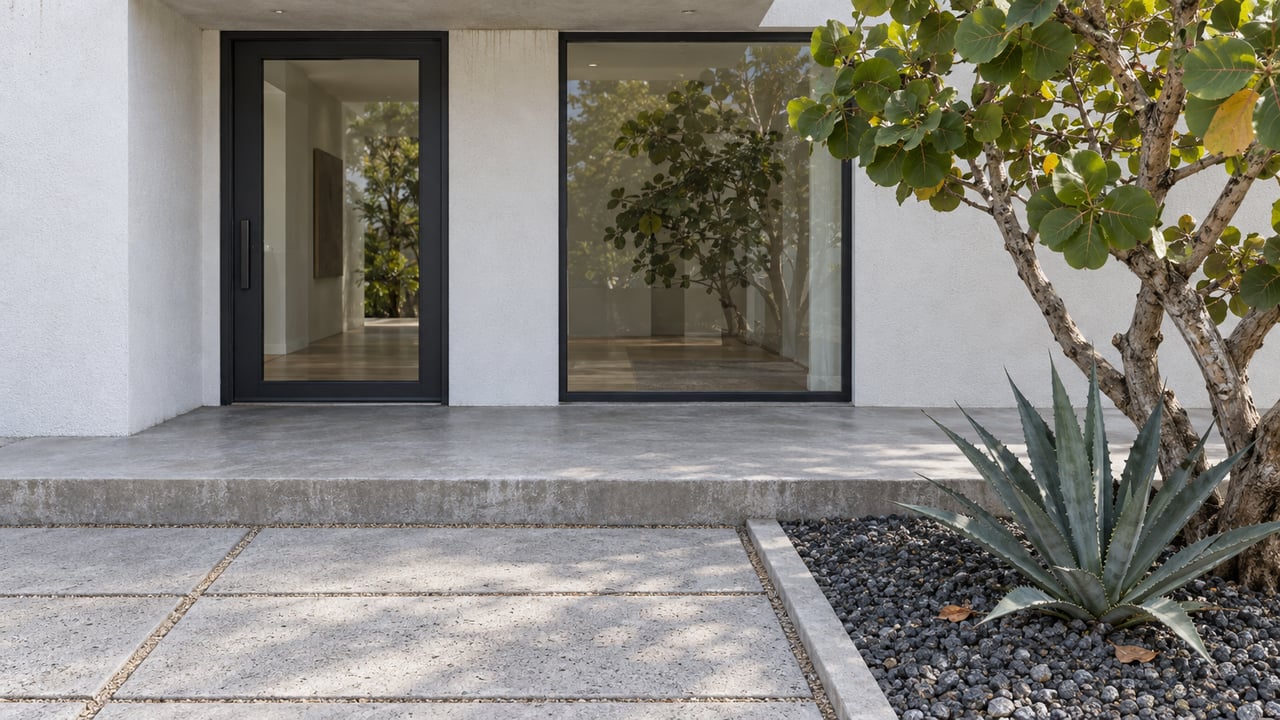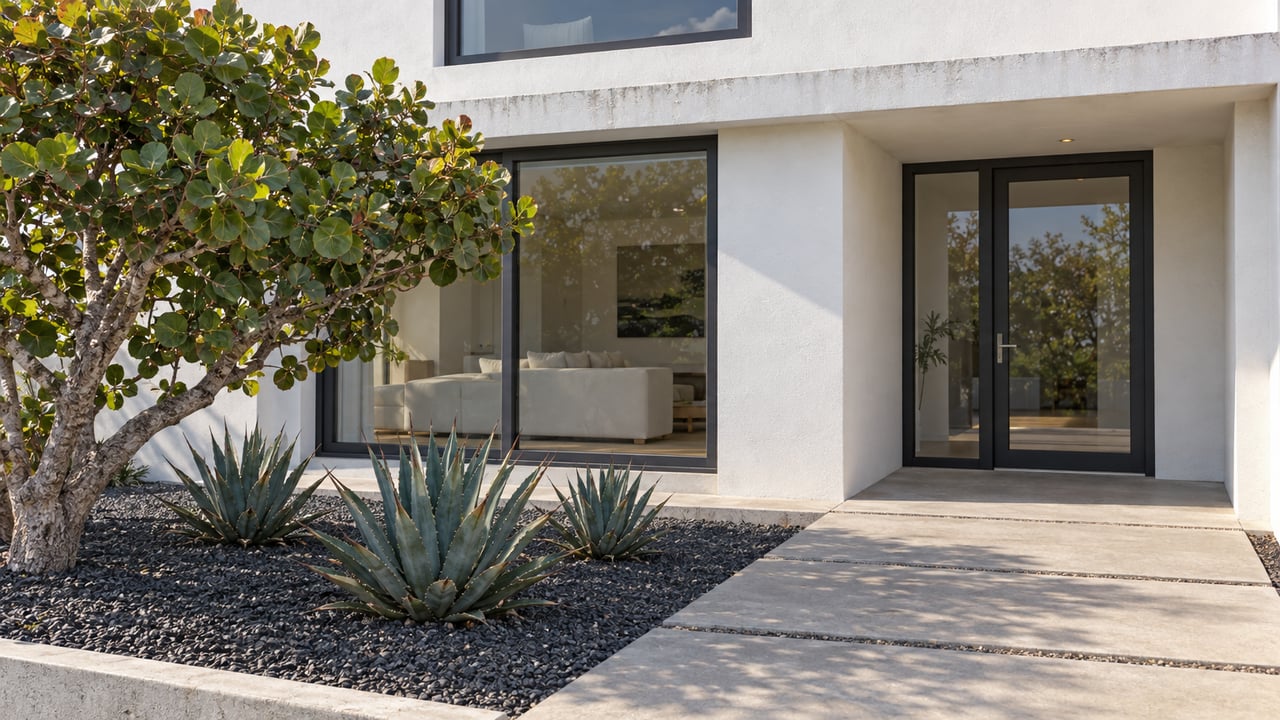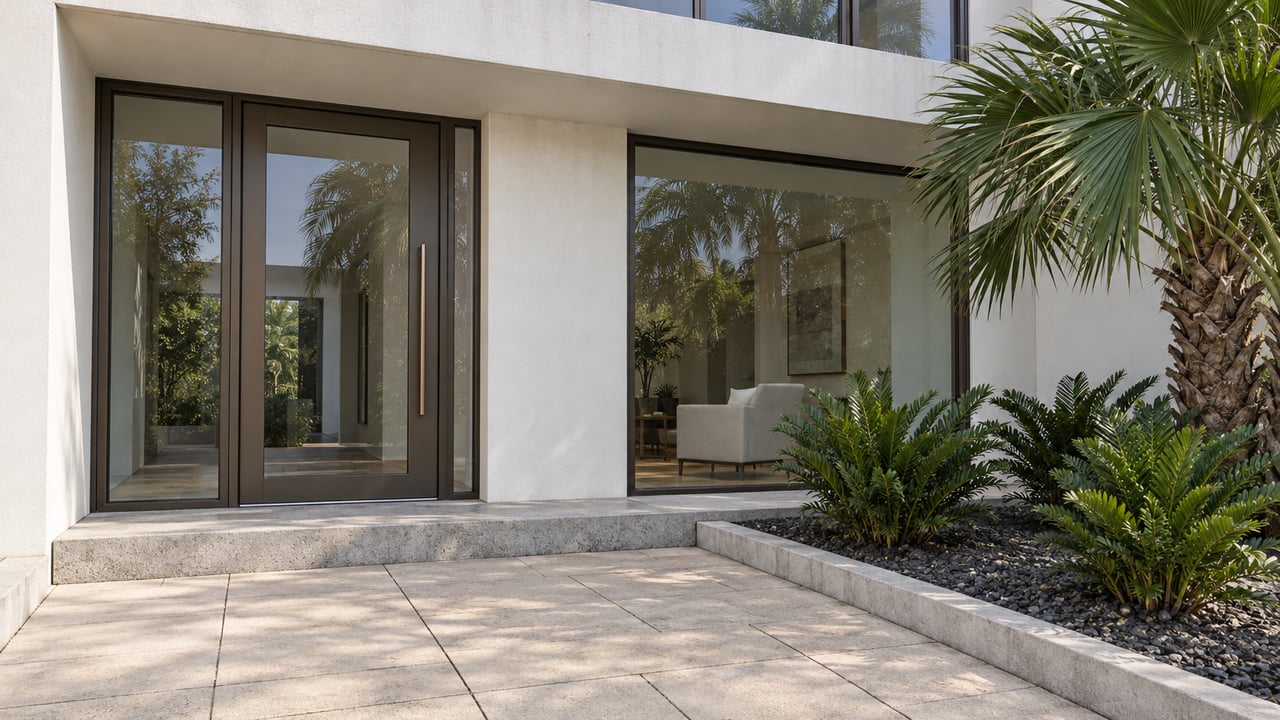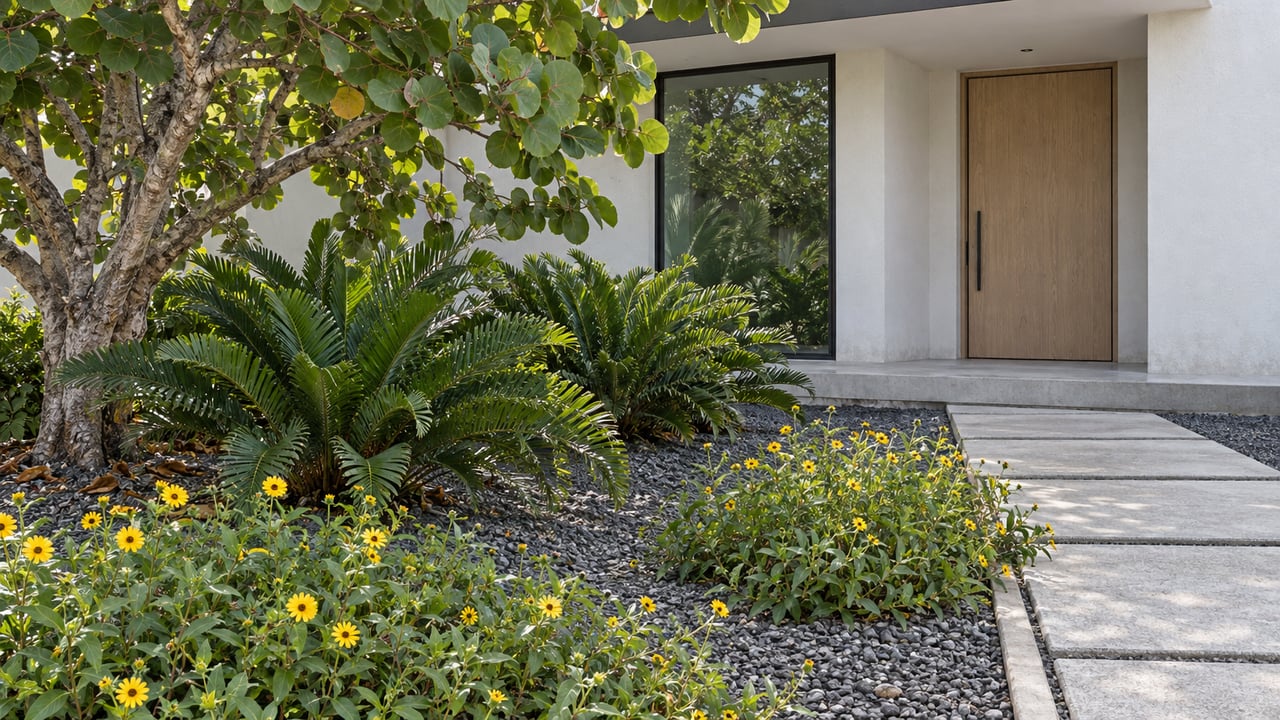
When Patricia and Larry built their house on the barrier island, the lot had only a few cabbage palms on the east side. The county required them to put in grass to prevent erosion. According to their profile on the tour's website, Patricia has since "slowly removed most of the grass blade by blade," and gardens near what she calls "the highest salt content on the eastern seaboard." Her yard is now 80% native.
On Sunday, Nov. 8, from 9 a.m. to 4 p.m., visitors can walk through that yard and six other private ones. The Conradina Chapter of the Florida Native Plant Society is running its 17th annual Landscaping with Florida Natives Tour across Indialantic and Melbourne Beach. These gardens took years to build, sometimes decades. Most of that time went into taking things out. The tour's ticket includes a free native plant, which is how nearly every one of these yards began.
A timeline measured in decades
The tour lists seven private yards, all beachside. Each profile gives a start year and a share of native plants. Put side by side, the start dates go back almost four decades.
| Yard | Converting since | Native share | What was there first |
|---|---|---|---|
| Craig & Tina | 1989 | 80% | Hardly any plants beyond some Natal plums and sabal palms |
| Bill & Carol | 1999 | 99.9% | St. Augustine grass and invasive species |
| Karen & Gary | 2001 | 90% | A traditional lawn under 20+ sand live oaks |
| Nichole & Erik | 2009 | 100% | One lemon tree and all turf grass when they bought in May 2010 |
| Julia & Joe | 2016 | Over 50% | Grass lawn, nonnative shrubs and trees |
| Judi | 2018 | Over 80% | Not described |
| Patricia & Larry | 1999 | 80% | A few cabbage palms and county-required grass |
The newest garden on the list, Judi's, is eight years old. The oldest, Craig and Tina's, has been in progress since 1989 on a third of an acre. It now has nearly 30 sabal palms, live oaks, a magnolia, Southern red cedars, crinum lilies, and many coontie and palmettos.
Several of the yards also show the island's design talent. Nichole and Erik own Go Native Landscaping, and their yard is the firm's own work. Go Native also worked on Julia and Joe's riverfront property and on Judi's yard, where it partnered with Seajay Milner. Bill designed and installed his own yard. Karen and Gary built theirs with friends and credit Maple Street Natives for guidance on plant choices.
Most of the work was removal
Bill and Carol's property "needed to be cleared of useless St. Augustine grass and class 1 and 2 invasive tree and plant species" before the conversion to a subtropical coastal hammock could start. Karen and Gary skipped the sod cutter. They removed their lawn over many years by letting sections die off and weeding others by hand. A few patches of Bermuda grass and torpedo grass still survive, and they weed-whack them now and then.
Craig and Tina dug up their Natal plums, then lost their original sabal palms to a freeze. Julia and Joe redirected their driveway and changed how the property is reached. Judi often found plants in the wrong light or outgrowing their spot, and simply moved them.
Nichole and Erik's front yard is a full design, with large beds of gumbo limbo, necklace pod, blolly, bay cedar, sea grape, cocoa plum, muhly grass and sunshine mimosa. Their profile ends with a line any homeowner will recognize: "Still working on the backyard."
What moves in once the lawn is gone
The owners say the payoff is wildlife, and their lists are specific.
- Bill & Carol: more than 200 native plant species and well over 150 bird species seen from the property, owls included.
- Karen & Gary: eastern screech owls heard in the back yard, a rabbit that made its home in a saw palmetto, and occasional box turtles.
- Judi: burrows across the yard, two of them dug by gopher tortoises while she watched, plus a large land crab spotted in one of the holes. She also collects and uses water from four rain barrels.
- Julia & Joe: coyote, bobcat, wading and nesting birds, native bees and butterflies on their riverfront lot.
Most of these yards carry National Wildlife Federation Backyard Wildlife Habitat certification. Bill and Carol add Surfrider Ocean Friendly Gardens and Brevard County's Lagoon Friendly Yards. Julia and Joe and Judi are both registered with Monarch Watch.
The public stop planted in December 2024
The one public garden on the list is far younger than the private yards. On Dec. 14, 2024, the Space Coast Surfrider Chapter worked with the Florida Wildflower Foundation and the Viva Florida program to plant bioswales in Indialantic. The project is part of the national Ocean Friendly Gardens program, and its listing says it turned an ordinary swale into a 100% native planting.
According to the listing, the bioswales sit along a well-traveled pedestrian and bike path. They replace sod with native vegetation so stormwater soaks in and is filtered before it can carry nutrients toward the Indian River Lagoon. The tour asks visitors to park along 12th through 8th streets and walk to the west ends of those streets.
The bioswales show what an organized group planting can do on public land. The private yards show the change a single household makes over years, and in Craig and Tina's case since 1989.
Why the ticket comes with a plant
Saumya VanderWyst, a native-plant enthusiast who converted her own yard, explained the reasoning to Hometown News. Her rule is "right place, right plant," because sunlight, drainage, wind and the seasons decide whether something will grow. She waited a year after moving in before removing any grass, so she could watch how sun and water moved across her yard.
She also told the paper about the Atala butterfly, which depends on coontie, a native cycad. As coontie disappeared from cultivation, the butterfly was thought to be extinct. It came back after landscapers started planting coontie as an ornamental. Coontie is one of the plants Craig and Tina list in their yard.
Her advice to homeowners is to start small. "If we even plant one single native plant, we're turning our yards, our property into tiny national parks," she told Hometown News. That is the purpose of the free plant in every ticket. The paper reports that chapter members grow the plants themselves and offer established one-gallon pots and larger sizes.
Planning the Sunday
- Buy the ticket ahead of time. Tickets are $15 each through the tour's website and arrive by email as digital tickets. A printed brochure costs $5 more and is picked up at Orlando Park. Hometown News reports that visitors under 18 get in free.
- Start at Orlando Park, 1000 S. Ramona Ave. The first Conservation Fair runs there on the same day and hours. It is free, and the Town of Indialantic lists it as a showcase for nature-focused businesses, artists and nonprofits. Hometown News lists Brevard Zoo, Marine Resources Council, St. Johns Riverkeeper, Florida Wildlife Hospital, Audubon and Surfrider among the participants. The fair also has kid-friendly activities and a scavenger hunt built around hand-carved stamps of keystone plants.
- Follow each yard's parking note. Craig and Tina ask visitors to park on Ramona Avenue or in their driveway and to stay off Deland Avenue, a narrow road. Bill and Carol ask guests to stay on the road surface in front of their property and to keep clear of the house next door.
- Leave time for the Barrier Island Center. The Barrier Island Sanctuary Management and Education Center is at 8385 S. Hwy A1A in Melbourne Beach and is a tour stop. The Sea Turtle Conservancy runs the center, which has exhibits, a presentation hall, a small research library and a gift shop. An interpretive trail crosses the barrier-island habitats next door. Its regular hours are Tuesday through Sunday, 9 a.m. to 5 p.m., and the trail is open 7 a.m. to 6 p.m. from October through April.
Artists who work with native plants and animals will also be demonstrating at the private homes during the tour, Hometown News reports.
Three days later, on Wednesday, Nov. 11, the town holds its Veterans Day ceremony at Lily Park from 10 to 11 a.m. The town's Christmas tree lighting is on the calendar for Thursday, Dec. 3, from 6 to 8 p.m.
At the Gibbs Baum Team, we watch how yards like these change the barrier island block by block, and how much care owners put into the ground around their homes. If you're wondering how your own native plantings, mature oaks or Ocean Friendly Garden would read to a buyer, request a home valuation and we'll walk the property with you.